Autism assessments
Comprehensive, neuroaffirming autism assessments for children and adolescents. Designed to provide meaningful insight into your child's strengths, support needs and how best to help them thrive.
Autism assessments →Comprehensive, evidence-based assessments for children, adolescents and adults. Clear findings, practical recommendations, and a neuroaffirming approach throughout.
Sometimes a parent simply knows something isn't quite right — even if they can't put words to it yet. That's reason enough to start. Our assessments are designed to give a clear picture of how someone thinks, learns and experiences the world — and what kind of support would help.
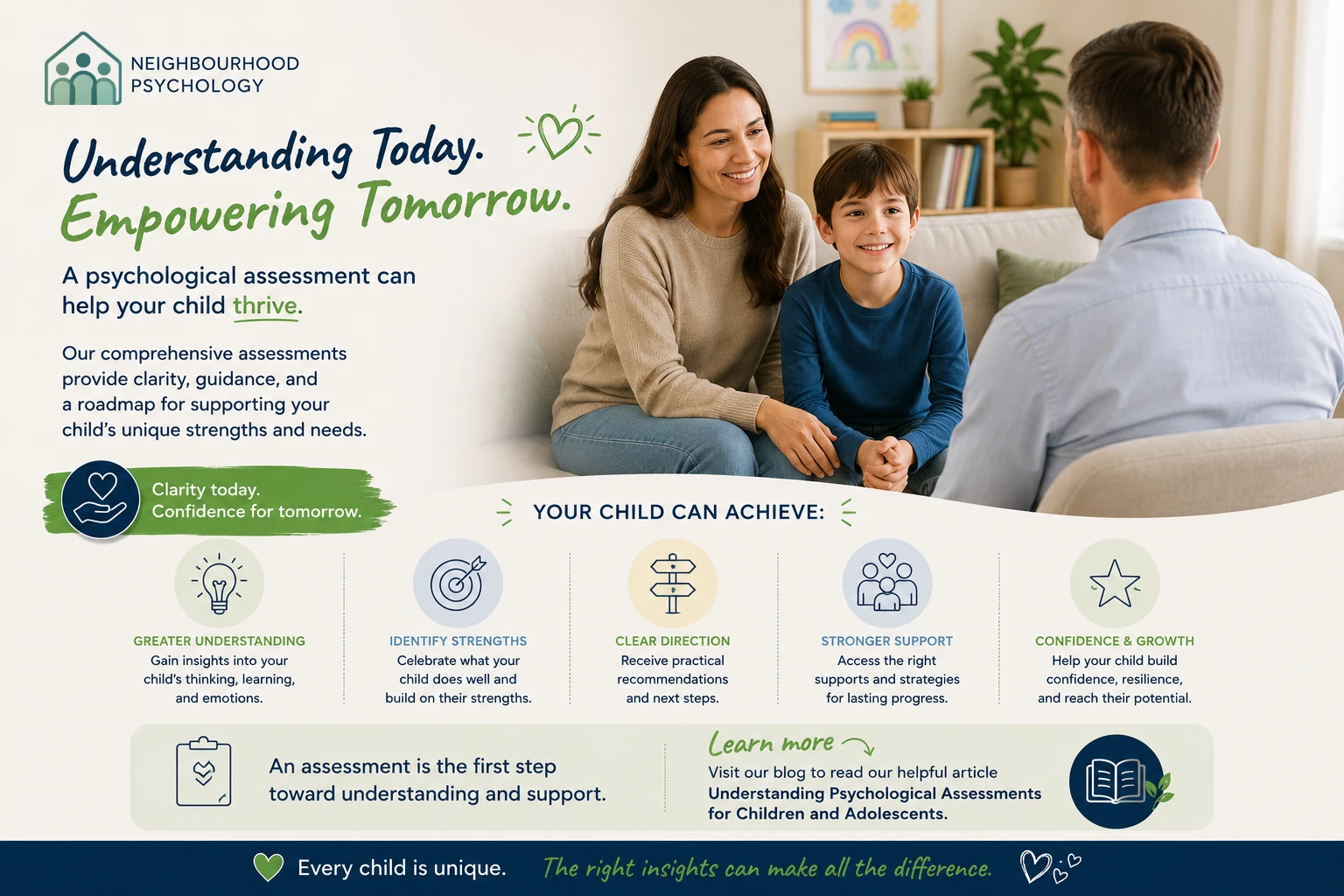
Whether you're seeking clarity around a possible diagnosis, guidance for school or work, or evidence for an NDIS application, we provide a thorough, respectful process with practical outcomes.
Comprehensive, neuroaffirming autism assessments for children and adolescents. Designed to provide meaningful insight into your child's strengths, support needs and how best to help them thrive.
Autism assessments →Structured assessment for attention and executive function differences in children, adolescents and adults. Useful for diagnosis, school or workplace accommodations, and treatment planning.
ADHD assessments →Detailed cognitive and academic assessment to understand strengths, learning profile and where targeted support can make the biggest difference — at school, home and beyond.
Psycho-educational assessments →ADHD and autism frequently co-occur. When both are suspected, assessing them together produces a more coherent clinical picture — one integrated process, one report.
Combined assessments →Covers cognitive ability, learning profile, ADHD and autism in one process. For when concerns span multiple areas and one diagnosis doesn't explain the full picture.
Comprehensive assessments →Not certain which assessment is right? Our parent FAQ walks through the common questions — what each assessment covers, how to get started, and what to expect from the process.
Read the FAQ →Regardless of the assessment type, every client goes through a consistent structured process — from initial consultation through to a feedback session and written report.
A clinical interview to understand current concerns, developmental history and daily functioning. This helps us tailor the assessment to the individual's needs.
Standardised testing and structured activities conducted across one or more sessions. May include questionnaires, cognitive measures, observation tasks and information from parents, teachers or the workplace.
A comprehensive written report covering findings, diagnostic formulation and practical recommendations — written clearly for families while suitable for GPs, schools and NDIS applications.
A dedicated session to walk through the report together, answer questions and discuss practical next steps for home, school and any additional supports.
Assessment fees vary depending on the type and complexity of assessment. NDIS self-managed and plan-managed participants are welcome. DVA referrals are also accepted. We'll walk you through costs clearly before anything is booked.
An MHCP is not required to book an assessment. However, a GP referral may support a Medicare rebate for some parts of the process.
The number of sessions varies depending on the type of assessment. Autism and ADHD assessments are typically completed across 1–2 sessions. Psycho-educational assessments generally require 2–4 sessions depending on the scope of testing required. Your psychologist will discuss the expected process with you at the initial consultation.
In most cases, a parent or caregiver will need to be present — particularly for younger children. This can be flexible depending on age and circumstances, and some background information can be gathered via questionnaire or Telehealth. Please contact us to discuss your child's specific situation.
An assessment isn't just about a diagnosis — it's about understanding how someone thinks, learns and experiences the world, and what can help. Get in touch to find out more.